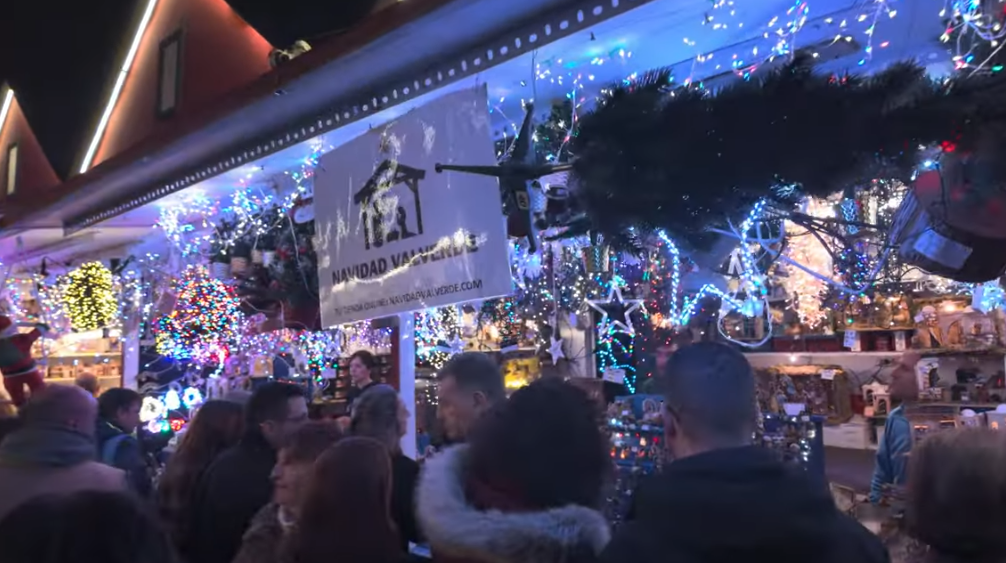
When December rolls around, Madrid’s Plaza Mayor becomes one of the city’s most magical settings. The centuries-old square lights up with a traditional Christmas market, drawing locals and visitors alike into its red stalls, nativity figures, and festive glow. But is it truly worth your time? To answer that, I dug into Reddit reflections, travel blogs, review sites, and visitor videos to capture both the love and the critiques.
For full details about schedules, opening hours, and related markets, check our Christmas markets in Madrid page. And to keep current on cultural events and festivals in the city, see What’s Happening in Madrid.
A visual taste: walking through the market
If you’d like to get a feel before visiting, YouTube has plenty of walkthroughs. A popular one is this Madrid Christmas Market (2024): Plaza Mayor which captures the stalls, lights, and evening atmosphere.
Other useful video guides include:
- Magical Madrid: Christmas Market at Plaza Mayor
- Top 4 Christmas Markets in Madrid, Spain | 4K Walking Tour
- We Visited Madrid’s TOP 3 Christmas Markets
What people praise
Many travelers say they leave with fond memories of the market’s charm and locale.
Travel blog Discover Interesting Places writes: “The market stalls, all painted in festive red, set against the magnificent Plaza Mayor, create an atmosphere of traditional Christmas charm.” (source)
On TripAdvisor, one visitor noted:
“I love the Christmas Market in Madrid’s Plaza Mayor. There is a variety of Christmas products and a very pleasant traditional atmosphere.”
Redditors also highlight the combination of lights and market stalls. One commenter on r/MadridTravelGuide wrote that the square’s decorations “blend perfectly with the traditional Christmas market.”
Plaza Mayor is especially renowned for its belén (nativity) figurines. Devour Tours calls it “the most classic of all the Christmas markets in Madrid,” emphasizing its unique cultural focus compared to the food-heavy Northern European markets.
Similarly, the travel blog Passaporte no Bolso adds that the market “feels less like a tourist trap and more like a true Madrid tradition,” pointing out how locals still shop here annually for figurines and decorations (source).
What people caution—or criticize
Even fans warn about some downsides.
Crowds. Devour Tours advises avoiding peak evenings because “the crowds can get pretty intense” (source). On Reddit, travelers describe Plaza Mayor as “shoulder to shoulder,” with one even cautioning about “sketchy people” in the packed square.
Food & drinks. A frequent disappointment is the lack of festive food stalls. On r/Madrid, one visitor remarked: “The stalls are charming, but if you’re looking for hot food or drinks, you’ll need to duck into a nearby bar or café.”
Predictability. Some bloggers suggest that for seasoned Christmas market visitors, Plaza Mayor may feel less novel and more decorative, especially compared to German-style markets with live music and food offerings.
Final verdict
The Plaza Mayor Christmas Market is worth seeing—but you’ll enjoy it most if you go in with the right expectations. Go for the atmosphere, history, and tradition, not for a food-fest. Visit early in the evening or during weekdays to avoid crushing crowds, then warm up with a drink in one of the nearby cafés.
In the end, it’s less about what you can buy, and more about being part of a Madrid holiday tradition that has enchanted generations.


