Coffee, Taxis, and Beer: A 2026 Budget Guide to Madrid With Style

Madrid isn’t just the capital of Spain; it’s a city that lives on the streets, fueled by the aroma of fried calamari and the constant hum of bustling terraces. Unlike many other European capitals, Madrid maintains a vibrant balance where high-end luxury and grit-and-glory tradition live side-by-side. In 2026, the city has cemented its status as a global gastronomic powerhouse, which has nudged prices up slightly, but it remains a place where your Euro goes further—if you know where to spend it.

From the century-old taverns of La Latina to the trendsetting districts of Justicia and Chamberí, here is everything you need to know to enjoy the Madrid lifestyle without breaking the bank.


🍺 Cañas and Tapas: The Art of the Small Pour

In Madrid, beer is traditionally ordered as a “caña” (a small glass). The secret? A caña stays cold until the very last sip. Better yet, many traditional bars still honor the custom of serving a free tapa with every drink.

  • Caña of Beer: €1.80 – €2.50. In authentic neighborhood bars, you’ll find them at the lower end, while in tourist hotspots like Plaza Mayor, you might pay a “tourist tax” with prices hitting €4.00.
  • Doble (Larger glass): €2.80 – €4.00.
  • Vermut de Grifo (Vermouth on tap): €2.50 – €3.50. This is the official drink of Sunday afternoons. Do not leave without trying a glass with an orange slice and an olive.
  • Supermarket: €0.70 – €1.10 for a can of Mahou (the undisputed queen of Madrid beers).

☕ Coffee and the Iconic Calamari Sandwich

A typical Madrid breakfast often involves churros con chocolate, but the city’s true signature snack is the legendary bocadillo de calamares.

  • Café Solo or Café con Leche: €1.50 – €2.20. In the specialty “third-wave” coffee shops of Malasaña, a flat white can reach €3.50.
  • Bocadillo de Calamares: €4.00 – €6.50. An essential Madrid experience, especially near Puerta del Sol.
  • Churros (Portion of 4-6): €3.00 – €5.00. If you head to the world-famous Chocolatería San Ginés, expect to pay a bit more for the historical atmosphere.

🚕 Transport: White Taxis and Seamless Connections

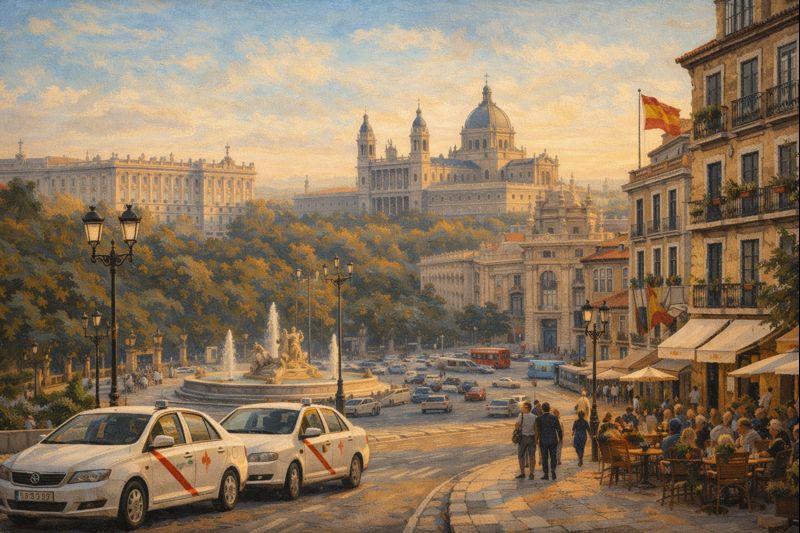
Madrid is a very walkable city, but its public transport is among the best in the world. Official taxis are white with a diagonal red stripe on the front doors.

  • Base Fare: €2.50 (Mon–Fri) / €3.15 (Weekends and holidays).
  • Airport to City Center: A flat rate of €33.00 (includes luggage).
  • Ride-sharing (Uber/Cabify): Dynamic pricing. They are often competitive for longer trips, but during rush hour, an official taxi is often faster due to the dedicated bus/taxi lanes.
  • Metro/Bus: €1.50 – €2.00 for a single trip. In 2026, the “Multi” card is the standard rechargeable way to travel.

🍽️ Dining: From the “Menú del Día” to Late-Night Feasts

The “Menú del Día” (Menu of the Day) is a protected Spanish institution. It is the best way to eat a home-cooked, two-course meal plus dessert and a drink for a fixed price.

  • Menú del Día (Lunch): €12.00 – €16.00. In business districts or non-tourist residential areas, this is arguably the best value-for-money meal in Europe.
  • Dinner for One (Mid-range): €25.00 – €40.00. This usually includes a glass of house wine (typically a decent Rioja or Ribera del Duero).
  • Raciones for Sharing (Dinner for two): €45.00 – €70.00. Madrid is best enjoyed by sharing plates (raciones) of patatas bravas, croquetas, and Iberian ham.

💡 Golden Tips for Your 2026 Budget

  • The “Terrace Supplement”: Many bars charge an extra 10% if you choose to sit outside rather than at the bar or inside. It’s always noted on the menu—keep an eye out!
  • Eat Like a Local: Madrid eats late. Lunch is at 2:00 PM, and dinner rarely starts before 9:00 PM. Many budget-friendly kitchens close between 4:00 PM and 8:00 PM.
  • Tap Water: Madrid’s tap water is famously the best in Spain. Don’t waste money on plastic bottles; ask for “una jarra de agua” (a pitcher of water) at the restaurant—it’s free, safe, and delicious.

❓ Traveler FAQ: Madrid Edition

Is tipping mandatory in Madrid?
No, and there is no fixed percentage. If the service was excellent, leaving the small change or €1–€2 is more than enough. In high-end restaurants, a 5–10% tip is a generous gesture.

Can I pay with a card everywhere?
Yes, in 2026, card and mobile payments are accepted almost everywhere, even for a single coffee. However, small markets or very old “hole-in-the-wall” bars might ask for a €5 minimum.

Are taxis safe at night?
Extremely. Madrid taxis are highly regulated and safe. Just ensure the meter is turned on at the start of the trip (unless you are doing the flat-rate airport run).

How can I save on museums?
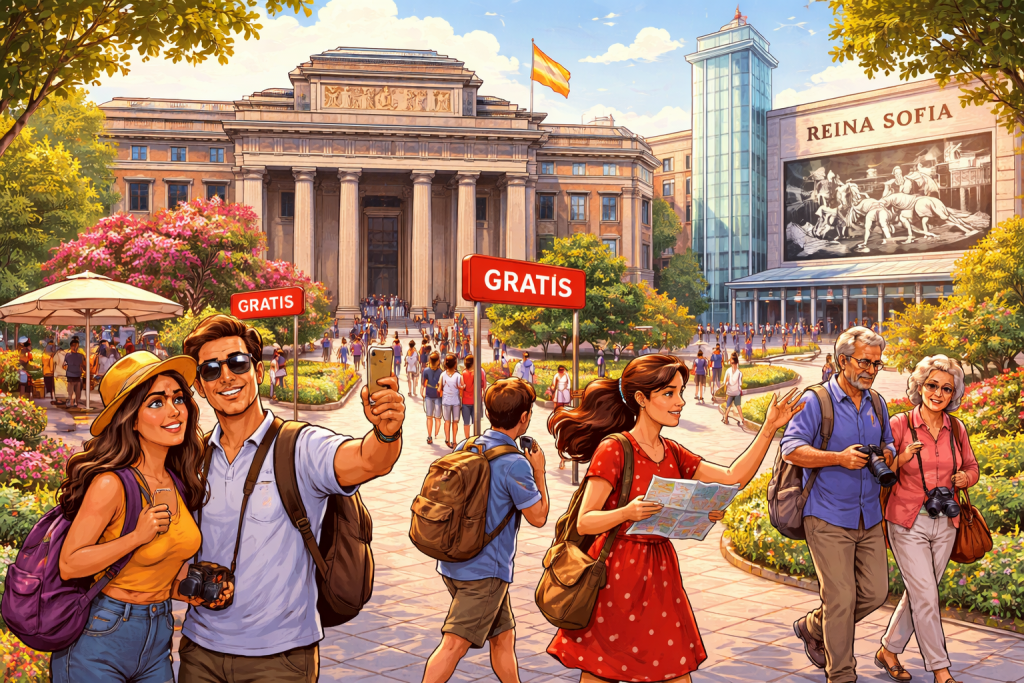
Madrid’s “Golden Triangle of Art” (Prado, Reina Sofía, and Thyssen) offers free entry hours. For example, the Prado is usually free Monday to Saturday from 6:00 PM to 8:00 PM. Plan ahead and save your Euros for more tapas!
Madrid Easter Guide: Opening Times & Local Tips

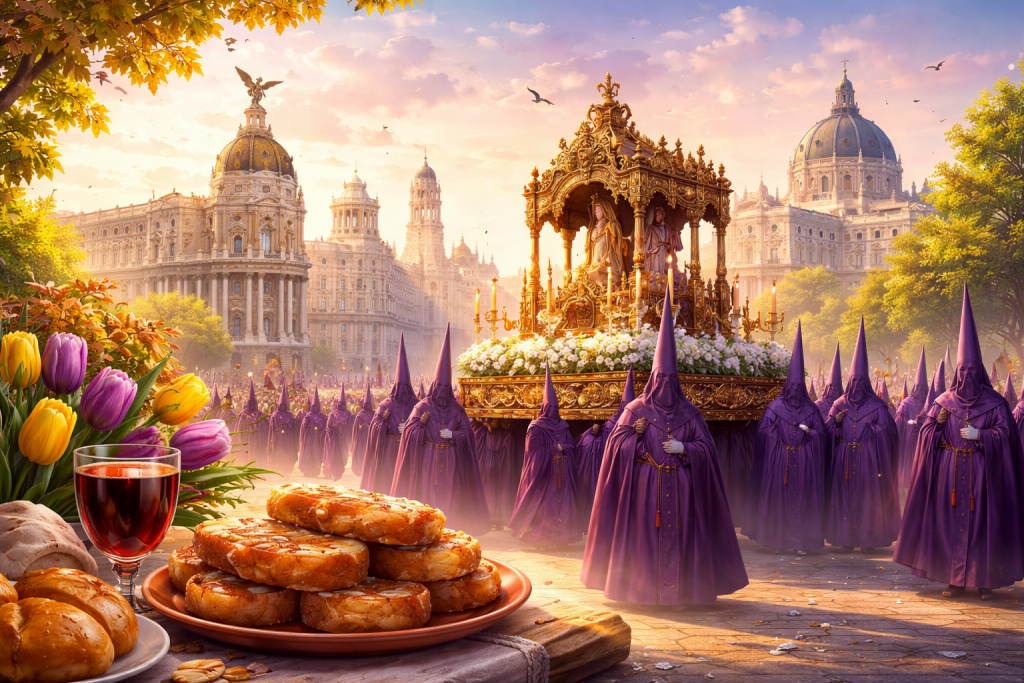
Easter in Madrid, known as Semana Santa, is a period of grand processions, traditional sweets, and a city that feels remarkably different from its coastal neighbors. While Madrid embraces its inland traditions with heavy religious floats and brass bands, it remains a bustling metropolis where finding a great meal or an open museum is rarely an issue.

If you are also visiting the coast during your Spanish holiday, you can compare these traditions with our Barcelona Easter guide to see how the two cities differ.

Here is everything you need to know about navigating the Spanish capital during the Easter season.


🏛️ Is Madrid open during Easter?

The short answer is: Yes, but with some “Dry” spots. Madrid is a city that never truly sleeps, but its shopping habits change during the holy days. To stay updated on specific processions or holiday events, be sure to check what’s happening in Madrid.

  • Maundy Thursday & Good Friday: These are major public holidays in Madrid. Unlike Barcelona, where Thursday is a working day, Madrid slows down for both. Most high-street shops (like those on Gran Vía) stay open, but smaller neighborhood stores and public offices will close.
  • Easter Sunday: A quiet morning followed by a very busy afternoon. Most major commercial centers stay open, but many family-run taverns might close for their own celebrations.
  • Easter Monday: Take note! While this is a massive holiday in Barcelona, Easter Monday is a normal working day in Madrid. Everything is open as usual, from banks to the smallest boutiques.

🖼️ Museums and World-Class Art

Madrid’s “Golden Triangle of Art” is one of the city’s biggest draws, and fortunately, these institutions remain very accessible. For more details on planning your cultural visit, see our guide to Madrid museums.

  • Prado, Reina Sofía, and Thyssen-Bornemisza: These major museums stay open throughout the Easter weekend. However, because Madrid is a hub for domestic tourism during this time, queues can be long.
  • Royal Palace: Usually open, but it may close or have restricted hours if official state ceremonies are taking place.
  • Processions: Be aware that many processions pass through the Puerta del Sol and the streets surrounding the Prado. This can make reaching certain museums on foot a bit of an adventure!

🛍️ Shopping and Markets

Madrid is a shopper’s paradise, and the holiday won’t get in your way if you know where to go.

  • Gran Vía & Fuencarral: Most big-name brands remain open throughout the weekend, including the public holidays.
  • El Rastro: The famous Sunday flea market in La Latina happens as usual on Easter Sunday. It’s a fantastic way to soak up the local atmosphere.
  • Supermarkets: Smaller “Express” supermarkets usually stay open, but the larger ones (like Mercadona) will likely be closed on Thursday and Friday.

🍴 Madrid’s Easter Flavors

While Barcelona has its chocolate Monas, Madrid has its own legendary treats that you simply must try:

  1. Torrijas: This is the undisputed king of Madrid’s Easter. It is essentially an elevated version of French Toast—bread soaked in milk or wine with honey and spices, then fried. You will find them in every pastry shop and many bars.
  2. Potaje de Vigilia: A hearty chickpea stew with spinach and cod, traditionally eaten on Good Friday when meat is avoided.
  3. Soldaditos de Pavía: Crispy fried cod strips that are a staple in Madrid’s historic taverns during Lent.

Local Tip: If you want to see the most impressive processions, head to the steps of the Colegiata de San Isidro or the Plaza de la Villa. The energy here is palpable and quite different from the more modern celebrations found elsewhere.

🚋 Getting Around

Because of the many processions in the city center, several bus routes will be diverted and some streets will be pedestrian-only. The best way to move around is the underground. You can find and download the latest Madrid metro map here to help navigate the closures.

On Thursday and Friday, the metro and buses run on a Sunday/Holiday schedule, meaning slightly longer wait times between trains.

Enjoy the sound of the drums, the taste of the Torrijas, and the vibrant spring energy of Madrid!

Free Museums and Free Museum Days in Madrid: When You Can Visit for €0 (And What Actually Works)

If you’ve ever googled “free museums in Madrid” and fallen down a rabbit hole of half-true blog posts, outdated schedules, and comment sections arguing about whether “Sunday after lunch” still counts as free… welcome. You’re not alone.

Yes, free museums and free museum hours in Madrid are absolutely a real thing. No, they are not always simple. And yes, they sometimes change just enough to make you question reality while standing in line.

This guide breaks it all down in plain English: which Madrid museums are free, when they’re free, and what the actual rules are—without the fluff, the guesswork, or the “trust me bro” energy.


Are museums in Madrid really free sometimes?

Short answer: yes.
Long answer: yes, but with conditions.

Madrid has one of the most generous public museum policies in Europe. Many major museums offer daily free time slots, while others are always free, or free on specific days of the week or month.

The key thing to understand is this:

Free entry is usually tied to specific hours, specific days, or specific visitor categories.

If you show up at the wrong time, you’ll pay. If you show up at the right time, you’ll walk in feeling like a budget-travel genius.


Always free museums in Madrid (no timing gymnastics required)

Let’s start with the easiest wins.

These museums are free every day, no ticket tricks involved:

Museo del Prado – free hours daily

Madrid’s most famous museum isn’t fully free all day, but it does offer free entry every single day during the last opening hours.

  • Free entry: Monday–Saturday: last 2 hours, Sunday & holidays: last 3 hours
  • Expect crowds. Big ones. But also… masterpieces.

Yes, this is where you’ll see Velázquez, Goya, Bosch, and friends. For zero euros.


Museo Reina Sofía – modern art, free daily

Home of Picasso’s Guernica, this museum also has daily free hours.

  • Free entry: Monday, Wednesday–Saturday evenings, Sunday afternoons
  • Closed Tuesdays (free or not, no one gets in)

If modern art makes you say “I don’t get it, but I like it,” this is your place.


Museo Thyssen-Bornemisza – partial free access

This one is slightly sneaky.

  • Free entry: Monday evenings
  • Permanent collection only

Still worth it. The Thyssen nicely fills the gap between Prado classics and Reina Sofía modernism.


Museums that are 100% free, all the time

These are the no-stress museums—walk in whenever they’re open.

Museo de Historia de Madrid

Perfect if you want to understand how Madrid went from “small town” to “capital with attitude.”

  • Always free
  • Centrally located
  • Surprisingly good

Museo de Arte Contemporáneo de Madrid

A calmer alternative to Reina Sofía.

  • Always free
  • Smaller, quieter, more “local”

Museo de San Isidro

Madrid before Madrid was Madrid.

  • Archaeology, origins, legends
  • Always free

Free museum days: Sundays and holidays

Here’s where rumors usually start.

Many state-run museums in Madrid are free on Sundays, especially Sunday afternoons, and on public holidays.

This applies to museums under Spain’s Ministry of Culture, including:

  • Museo del Prado
  • Museo Reina Sofía
  • Museo Thyssen-Bornemisza

Important detail:
“Sunday free” often means after a certain hour, not all day. This is where people get burned.


Who gets free entry regardless of day?

Even outside free hours, many visitors qualify for free tickets:

  • EU citizens under 18
  • Students (often under 25)
  • Seniors (usually 65+)
  • People with disabilities
  • Teachers (with valid ID)
  • Journalists
  • Art historians and museum professionals

Bring physical ID. Screenshots sometimes work, sometimes don’t. Madrid museums love rules.


Is it worth going during free hours?

Let’s be honest.

Pros:

  • Free (obviously)
  • Great for budget travelers
  • You feel morally superior for not paying

Cons:

  • Crowds
  • Lines
  • Less “contemplative silence,” more “shoulder-to-shoulder Renaissance”

If you want quiet, pay the ticket.
If you want value, go free and embrace the chaos.


Strategy tips for free museum hopping

  • Arrive 30–45 minutes before free hours start
  • Use weekdays, not weekends
  • Combine museums that are close together (hello, Art Triangle)
  • Eat after the museum, not before—lines don’t care about your hunger

What about special exhibitions?

Important reality check:

Free entry usually covers permanent collections only.

Temporary exhibitions often cost extra, even during free hours. Sometimes they’re included. Sometimes not. Sometimes only on certain days.

Yes, it’s confusing. Welcome to museums.


Disclaimer (read this, seriously)

Museum schedules do change. Free hours get adjusted. Holidays mess things up. Special events override normal rules.

Before you go, always double-check directly on the official museum websites to be 100% sure nothing has changed.
We do our absolute best to keep this guide updated, but museums have the final say—not bloggers, not rumors, and definitely not that one Reddit comment from 2019.


Want to plan more around your museum days?

If you’re building a full Madrid itinerary—attractions, neighborhoods, food, transport—check out the full Madrid Guide:
https://www.guidemadrid.net/

You’ll also find a solid overview of Madrid attractions here:
https://www.guidemadrid.net/attractions/

And if you want to align free museum visits with festivals, concerts, or special events:
https://www.guidemadrid.net/whats-happening/


Final verdict: myth or reality?

Free museums in Madrid are very real.
They’re generous, frequent, and genuinely worth planning around.

You just need:

  • The right timing
  • A bit of patience
  • And the courage to walk past a long line thinking, “Yes. I paid zero.”

Madrid rewards the prepared traveler—and sometimes, the cheapest ones win.

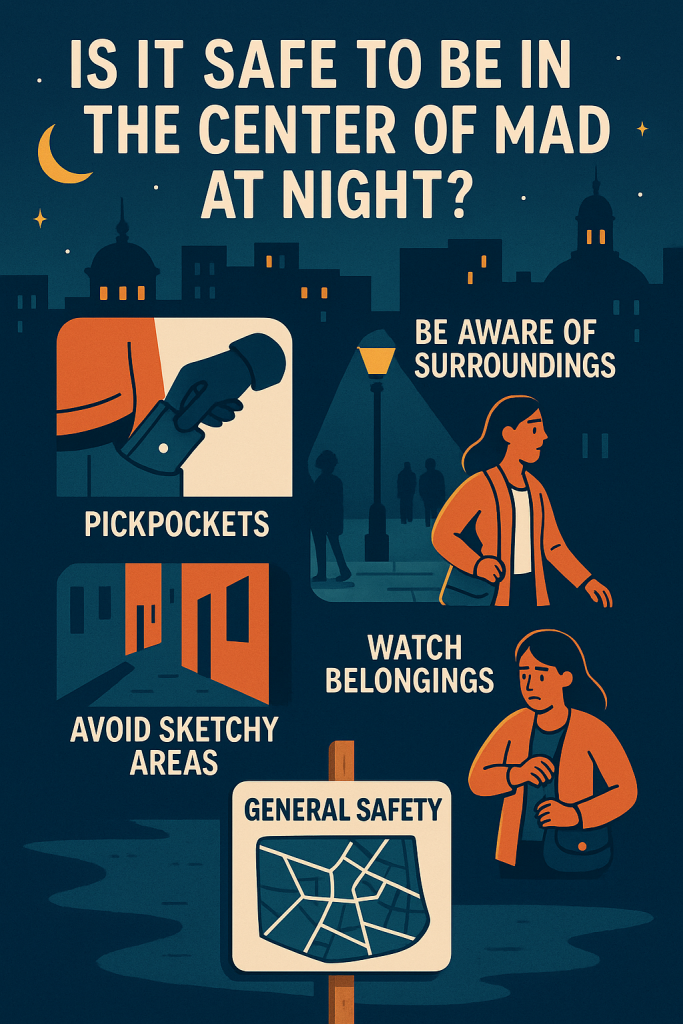
Madrid Safety Guide – Do You Need To Worry As a Tourist?

Madrid, the vibrant capital of Spain, is famous for its majestic architecture, tapas bars, and late-night energy. Whether you’re strolling through the lively streets of Malasaña, catching a flamenco show, or dining al fresco in La Latina, the city offers rich cultural experiences around the clock. But what about safety, especially at night? Is it safe to walk around the city center after dark? What should tourists look out for?

This guide provides a comprehensive overview of crime rates, safety concerns, and practical tips for visitors to central Madrid.


🌆 Madrid at Night: Atmosphere and Activity

Madrid is a city that never really sleeps. Locals — the Madrileños — are known for eating dinner late (often after 9 p.m.), and the nightlife continues well into the early morning. The city center, particularly neighborhoods like Sol, Gran Vía, Chueca, Malasaña, and Lavapiés, remain busy and filled with people long after sundown.

In general, this lively atmosphere contributes to safety. You’re rarely alone on the streets, even late at night — a factor that tends to deter certain types of crime.


📊 Crime Rates in Madrid: How Safe Is It?

According to data from the Spanish Ministry of the Interior and multiple safety indexes:

  • Madrid is one of the safer capitals in Europe.
  • The violent crime rate is low compared to cities like Paris, London, or Rome.
  • Petty crime, however — especially pickpocketing — is common, especially in tourist areas.

🔎 By the numbers (as of the most recent data):

  • Violent crimes: Low
  • Theft/pickpocketing: Moderate to high in tourist areas
  • Sexual assault: Very low, but like anywhere, not zero
  • Drug-related issues: Visible in certain areas, but not aggressive or threatening

🧥 Pickpockets: The Real Threat

Madrid is infamous for its highly skilled pickpockets, especially in busy areas like:

  • Puerta del Sol
  • Gran Vía
  • Retiro Park
  • Metro stations, especially during rush hours
  • Tourist hotspots like Museo del Prado or Royal Palace

They often work in groups and use distraction tactics:

  • Someone bumps into you while another snatches your bag
  • A “petition” girl or fake survey taker distracts you
  • A child might ask for money while an adult takes your wallet

📌 Tips:

  • Keep bags zipped and worn in front of you
  • Don’t carry your passport — a copy is enough
  • Use a money belt or inside jacket pocket
  • Watch your phone and wallet in cafes and on metro seats

🌙 How Safe Is Madrid at Night?

Madrid is generally safe at night, even in the center. You’ll see solo women walking home, elderly couples out for a stroll, and large groups of locals enjoying nightlife.

👍 Safe areas for nighttime walking:

  • Chueca
  • Malasaña
  • Huertas / Barrio de las Letras
  • Salamanca (very upscale and quiet)
  • Lavapiés (diverse and lively, though some find it edgier)

⚠️ Areas to be more alert:

  • Puerta del Sol (very crowded and attracts scammers)
  • Parts of Lavapiés or Embajadores at very late hours
  • Madrid Río Park — safe, but empty after dark

🚫 You won’t typically encounter muggings or violent attacks, but drunken behavior, occasional harassment, and drug users in less-traveled streets may occur — especially after 2 a.m.


💊 Drugs and Narcotics

Madrid, like many major cities, has its share of drug use. In central areas, especially Lavapiés or around Calle Montera near Gran Vía, you might see:

  • Marijuana use in public (generally tolerated)
  • Occasional drug dealers offering “something” to tourists

They usually leave you alone if you show disinterest. Hard drug users are more visible in certain neighborhoods, but rarely dangerous.

Spain decriminalized personal drug use in private spaces, but possession or use in public is illegal and can result in fines.


🚨 Sexual Assault and Harassment

Spain has taken a strong stance against gender-based violence, especially in recent years. The rate of sexual assaults in Madrid is low, particularly in public spaces.

Still, women should use standard precautions:

  • Avoid walking home alone from bars in unfamiliar areas
  • Use registered taxis or ride-share apps like Uber, Bolt, or Cabify
  • Be cautious of drink spiking — though rare, it has been reported

There are blue help points in some metro stations, and police presence in nightlife zones is increasing.


🚓 Police and Emergency Help

Spain’s police force is generally approachable and helpful. Madrid has both:

  • Policía Nacional (national police)
  • Policía Municipal (local)

📞 Emergency number: 112
📞 Police direct: 091

In case of theft, you’ll need to file a report (denuncia) to your nearest police station (comisaría) — often required for travel insurance claims.


🚇 Madrid Metro Safety

The metro is safe, clean, and reliable — even late at night. It runs until:

  • 1:30 a.m. most nights
  • Busiest lines (1, 2, 3, 5) stay fairly populated until closing time

Tips:

  • Be extra alert during boarding and exiting
  • Sit near others, avoid empty cars late at night
  • Watch your bags on escalators and platforms

🧳 General Safety Tips for Tourists in Madrid

  • Don’t flash valuables like jewelry or expensive cameras
  • Carry minimal cash
  • Leave important documents in your hotel safe
  • Use ATMs inside banks, not those on the street
  • Trust your instincts — if a street feels sketchy, turn around
  • Know that most bars/clubs stay open until 4–6 a.m. — plan your return accordingly

🏨 Where to Stay for Peace of Mind

For tourists who prioritize security:

  • Salamanca – Upscale, quiet, and safe
  • Chamberí – Elegant, local, and residential
  • Retiro – Near the park, classy, and secure
  • Centro (Sol, Gran Vía) – Safe, but more crowded and noisy

🧭 Final Thoughts: Is Madrid Safe at Night?

Yes — Madrid is safe at night, especially compared to other major capitals. Violent crime is rare, and the city center is full of life. Still, petty crime is a real issue, and taking basic precautions is essential.

If you’re street smart, aware of your belongings, and stick to lively areas, you’ll likely find Madrid to be not just safe — but one of the most enjoyable cities to explore after dark.


Want more local tips and hidden gems in Madrid? Check out our Madrid Travel Guide for practical advice, neighborhood guides, and things to do!

Let us know your experience — did you feel safe walking around Madrid at night? Any tips or stories to share?

When do children receive Christmas presents in Spain?

In Spain, children traditionally receive their Christmas presents not on Christmas Day, December 25th, but rather on January 6th, which is known as Three Kings‘ Day or “Día de Reyes” in Spanish. This holiday is highly celebrated in Spain and other Spanish-speaking countries.

On the night of January 5th, children leave their shoes out, often filling them with treats for the Three Wise Men or the “Reyes Magos”: Melchior, Caspar, and Balthazar. It’s a custom that children believe the Three Kings will visit their homes during the night and leave gifts or presents in or near the shoes. It’s similar to the concept of Santa Claus or Father Christmas in other cultures.

January 6th, the Day of the Epiphany, is a public holiday in Spain and marks the culmination of the Christmas season. Families often gather, and children eagerly wake up to find their gifts, following the tradition of the Three Kings bringing them presents. It’s a joyous day filled with gift-giving, family meals, and various parades or processions in many towns and cities, with the Three Kings often riding through the streets to greet children and distribute sweets.

Is there a way in which I can watch Real Madrid – Juventus online?

On May 13th it is time for Read Madrid to play against Juventus in the second leg of the semifinal in the Champions League. In the first match played in Torino they lost 2-1, but now comes the home match and I would like to see Real Madrid beat the Italian team. But, where and how can I watch the match online?

Madrid Juventus

That is a great question, and luckily it is quite easy. This match will be shown on quite a lot of channels with online streams, but the problem is that these are channels you need to pay a lot of money to watch. That is why we recommend a different solution which we read about in the IP Address Guide.

Watch Real Madrid – Juventus online

To watch the match between Real Madrid and Juventus online we recommend that you get hold of a German IP address, something that can be done easily with a subscription to HideMyAss. We therefore recommend that you visit the HideMyAss website and sign up for one month or for twelve months. Then you should download the HideMyAss program, start it and connect to a server in Germany. You will then have a German IP address and then all you need to do is to visit ZDF.de (the website of the German TV channel ZDF), and they will have a live stream on their website which you can watch for free, which means that you can watch Real Madrid play against Juventus online on May 13th! Enjoy!

Read more about Real Madrid here in the Madrid Guide!

Is there a good gym near Puerta del Sol?

Question: I am ooking for a good gym near our apartment on calle cadiz near puerta del sol. Can you help me?

Gym in Madrid
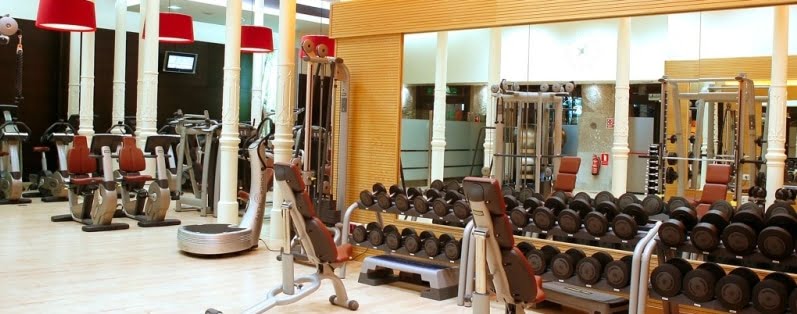
Picture from the Gym mentioned in this article

Thank you for your question! There are not a lot of good gyms in the very heart of Madrid, but if you want to enjoy life and and do some sports in the heart of Madrid near Puerta del Sol and your apartment on Calle Cadiz, then our recommendation would be Palacio Santa Ana Sport & Spa. This is a brilliant complex with fitness opportunities, good machines for exercising and also group practices. If you want to relax as well they have a very nice SPA area.

Their website can be found at: http://www.clubmetropolitan.net/gimnasio/palaciosantaana (unfortunately only in Spanish at the moment).
The full address of the complex is: Plaza del Ángel, 6 – 28012 Madrid.

If anyone has further insight, comments or experience, please write a comment!

Where can I watch Spain – Netherlands in Madrid on June 13th?

I will be in Madrid on June 13th and I am desperately longing to see the match between Spain and Netherlands on June 13th. Can I watch this on a normal TV station in Spain? Can I watch it online? Will it be shown in pubs and restaurants in town?

The answer to your question is yes! What do we mean? You asked three questions, and the answer to all of them is simply yes. In Spain there will be a combination of pay TV channel and public TV channels that will broadcast from the World Cup, but luckily all matches with Spain playing will be available on normal free public TV, meaning that you can watch the match just about anywhere, in your hotel room, in your apartment, or where you are. This also means that you can watch the match between Spain and the Netherlands on June 13th in almost any restaurants, bar or pub around Madrid, so it will rather be impossible not to notice and to watch this match, which will be a “repeat” of the World Cup final in 2010.

If you are out running somewhere, or just sitting on the train or somewhere else and want to watch the World Cup match between Spain and the Netherlands on your Android device or maybe somewhere else, then you can watch it online. Read more about watching Spain – Netherlands online in this article.

We hope you have found this answer useful, but if you have further insight or maybe a question, just write a comment! And, may the best team win (Spain!).

Which is the best hotel with five stars in Madrid?

If you are going to Madrid and want to live in luxury, then you should book a five star hotel. But, which is the best hotel in Madrid, in other words, the best five star hotel in Madrid.

There are quite a lot of five star hotels in Madrid, so it is not easy to pick the best one of all of these. However, there are some hotels in Madrid which are better than others, also among the five star hotels, so here we will focus on two such hotels which we believe to be the very best five star hotels, thus the best hotels of all hotels, in Madrid.

Best five star hotel in Madrid

Hotel Villa Magna

This is a beautiful five star hotel, with lots of splendid user reviews spread around on the Internet. They have free wireless Internet, a nice SPA area with fitness room and massage treatments available, and if you are hungry they have two nice restaurants inside its doors. It is located a bit outside the inner center of Madrid, not far from the Prado Museum and the El Retiro Park, and if you want to watch Real Madrid, it is easy to get to Santiago Bernabeu from Hotel Villa Magna.

Hotel Villa Magna
Hotel Villa Magna

Westin Palace Hotel

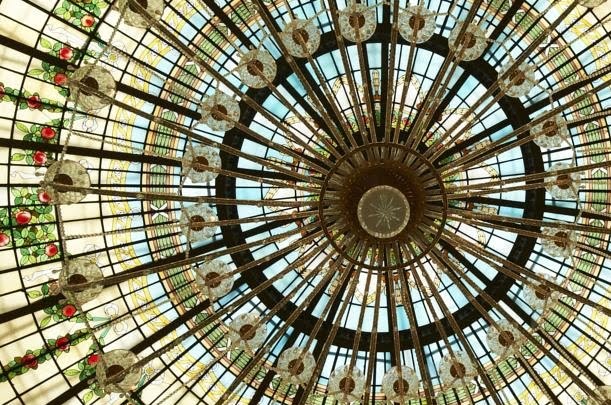
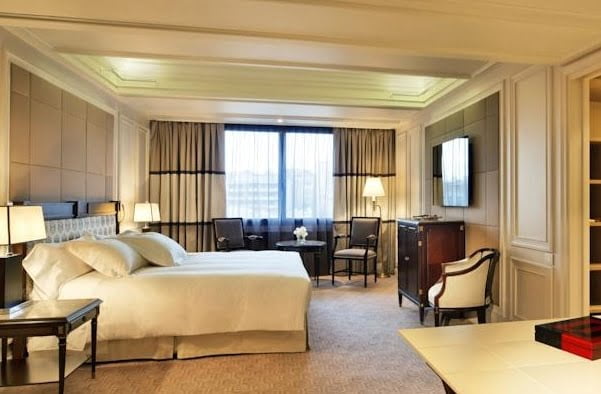
Would you like to eat your breakfast with beautiful live music in the background? Then visit the Westin Palace Hotel located in the museum area of Madrid, near Prado, Thyssen Bornemisza and Reina Sofia. The interior of the hotel is really beautiful, and especially the dome is something that will take your breath away. The location of the hotel is better than Hotel Villa Magnas, but unfortunately the wireless Internet is a service that you need to pay extra for.

Hotel Westin Palace

Where should I live in Madrid?

If you want to live in the nicest five star hotels, choose one of the mentioned hotels. If you prefer one of these based on the descriptions given by us, go for that. If you are still insecure, check the prices of both and book a room in the one that has the best prices.

If you have any further insight on the subject, or maybe you have experience from one of these, or some other hotel in Madrid, write a comment!

Where can I watch Real Madrid matches online?

I am a big fan of Real Madrid and I would love to watch some Real Madrid matches online? Can you please tell me how and where I can do that?

Real Madrid onlineFirst of all thank you for your question! The question is not really the kind of questions we normally answer about Madrid and Real Madrid, but we will simply answer shortly and refer you to a website where you can find a much more thorough instruction on how to watch Real Madrid online.

Since most TV channels pay a lot to get broadcasting rights to Spanish football, it is not really possible to watch them just for free online. That is why you need to pay special and quite expensive fees normally to watch La Liga matches or Copy del Rey matches online. There are some exceptions, and the best option is to watch it on the Austrian TV channel Laola1. You do need to change your IP address, but if you do so you can easily watch Real Madrid play online, all their La Liga matches and quite a lot of their Copa del Rey matches.

To find out exactly how this is working and some easy instructions on what to do, visit WatchWorldCup.net and read how to watch La Liga online.

If you should later come to Madrid, read more about Real Madrid here and at that site you can also find information on buying Real Madrid tickets online.